The Joint Fire Science Program (JFSP) Fire Science Exchange Network (FSEN)
FOSTERING ACTIVE INFORMATION FLOW FOR FIRE-RELATED CHALLENGES
The goal of the Fire Science Exchange Network is to accelerate the awareness, understanding, adoption, and implementation of readily available wildland fire science information.
Interagency wildland fire policy directs managers to apply the best available science to management plans and activities. With a cascade of available information and limited distribution or demonstration of information, it can be difficult for fire managers to receive the most relevant research for their local issue. As a result, valuable information and tools may go unused. The Joint Fire Science Program (JFSP) Fire Science Exchange Network is a national collaboration of 15 regional fire science exchanges that provides the most relevant, current wildland fire science information to federal, state, local, tribal, and private stakeholders within ecologically similar regions. The network brings fire managers, practitioners, and scientists together to address regional fire management needs and challenges.
The 15 Fire Science Exchanges
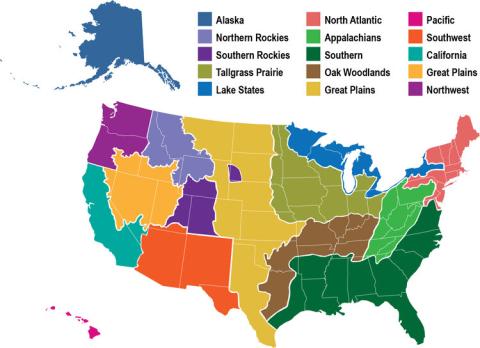
Alaska Fire Science Consortium
Consortium of Appalachian Fire Managers and Scientists
California Fire Science Consortium
Great Basin Fire Science Exchange
Great Plains Fire Science Exchange
Lake States Fire Science Consortium
North Atlantic Fire Science Exchange
Northern Rockies Fire Science Network
Northwest Fire Science Consortium
Oak Woodlands and Forests Fire Consortium
Pacific Fire Exchange
Southern Fire Exchange
Southern Rockies Fire Science Network
Southwest Fire Science Consortium
Tallgrass Prairie and Oak Savanna Fire Science Consortium
Joint Fire Science Program
AN INTERAGENCY RESEARCH, DEVELOPMENT, AND APPLICATIONS PARTNERSHIP
The JFSP provides funding for scientific studies associated with managing wildland fuels, fires, and fire-impacted ecosystems to respond to emerging needs of policymakers, managers, and practitioners.