Feb 6, 2026 • 11am-12pm
Details

Recording
Description
PG&E operates over 130,000 KM of overhead electric lines in Northern and Central California that can fail during weather events and present risk of wildfire ignition when fuels are receptive. Operational grid mitigations such as proactive deenergizations and sensitive relay settings effectively reduce ignition probability but lead to increased customer outages. Thus, it is imperative to deploy accurate operational risk models to drive daily decisions to mitigate risk. This talk focuses on our fifth-generation machine learning outage, ignition and wildfire probability models trained by coupling a WRF-based 30+ year climatology of weather, dead and live fuel moisture data with sub-daily fire occurrence and PG&E outage and ignition data.
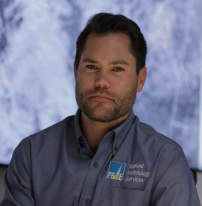
Scott Strenfel
Scott is a utility-weather and fire-weather subject matter expert and has been involved in utility operations for over a decade. He directs the Meteorology Operations and Fire Science teams at PG&E and is the Chief Meteorologist during emergency activations. He leads a team of operational meteorologists and experts in meteorological modeling, cloud computing and data science. His team is responsible for developing, deploying, and maintaining meteorological and utility-specific operational models (e.g., wind-outage and fire potential index) for operational decision making.
Scott oversees and participates in internal and external utility-weather research projects and Chairs an Industry Advisory Board for an academic-industry research collaborative. He regularly interfaces with regulators and authors sections of regulatory wildfire mitigation and financial filings. Scott was recently named the SJSU College of Science Outstanding Alumni, was selected by PG&E employees and senior leadership as the champion of PG&E’s Spark innovation challenge, and his team was awarded the Margaret Mooney Innovation Award for work related to solar forecasting. Prior to PG&E, Scott worked at Sonoma Technology Inc., and researched the efficacy of satellite-based fire detection systems and modeled emissions from wildfires. Scott holds a B.S. and a M.S. in Meteorology and was one of the first graduates from the San Jose State Fire Weather Research Laboratory.