Feb 29, 2024 • 2-3pm
Lecture | 2024 FFERAL Lecture Series
Details
Description
Fire suppression and past selective logging have fundamentally changed frequent-fire adapted forests. Management options available to address this problem include mechanical treatments (Mech), prescribed fire (Fire), or combinations of these treatments (Mech + Fire). We quantify changes from a 20-year forest restoration study in the northern Sierra Nevada. All three active treatments (Fire, Mech, Mech + Fire) produced forest conditions that were much more resistant to wildfire. Mech produced low fire hazards beginning 7-years after the initial treatment and Mech + Fire had lower tree growth than controls. The only treatment that produced inter-tree competition similar to historical California mixed-conifer forests was Mech + Fire, indicating that stands under this treatment would likely be more resilient to enhanced forest stressors. Mech resulted in positive revenues and was also relatively strong as an investment in reducing modeled fire hazard. The Mech + Fire treatment represents a compromise between the desire to sustain financial feasibility and the desire to reintroduce fire. If we do not use the knowledge from 20+ years of forest research and the much longer tradition of Indigenous cultural practices and knowledge, frequent-fire forests will continue to be degraded and lost.
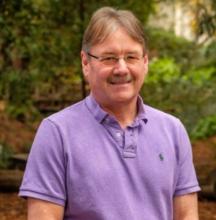
Scott Stephens
Presenter
Scott Stephens is interested in the interactions of wildland fire and ecosystems. This includes how prehistoric fires once interacted with ecosystems, how current wildland fires are affecting ecosystems, and how future fires and management will influence people and ecosystems. He is also interested in wildland fire and forest policy and how it can be improved to meet the challenges of the coming decades, both nationally and internationally. Working with Indigenous partners to learn how to steward ecosystems into the future with climate change is a key area of research.
Stephens has given testimony on fire and forest policy at the US House of Representatives, the White House, California Assembly and Senate, California Governor’s office, and recently severed on the 2024 US Wildfire Commission. He is on the Board of Directors of the Climate Wildfire Institute and is one of the leaders of The Stewardship Project which is a partnership of Indigenous people and western science to improve federal fire policy.