Details
Description
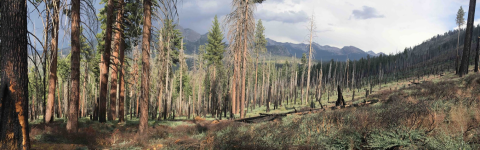
Join us for the first of our 2027 FFERAL Lecture Series. Join us for this hybrid event at UC Davis or over Zoom
Abstract: Faster fires, more intense night fires, and urban conflagrations all reflect how our nation’s ‘wildfires’ have gotten more extreme in recent decades. People have fundamentally altered the three ingredients needed for fire: fuel to burn, hot and dry conditions, and an ignition source. Fire is also a big data frontier with a wealth of information, from satellites to social media, that can be leveraged to delineate future wildfire risk and develop solutions. We have seen the most expensive wildfire seasons in the U.S. in the past decade, costing >$150B. We need to learn to live with fire, again. But how? This is an all-hands on deck moment where we must bring together people, data, and ideas. Ultimately, we need to burn better and build better.
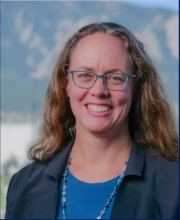
Jennifer Balch, PhD
Presenter
Jennifer Balch is Director of the NSF-funded Environmental Data Science Innovation & Impact Lab at the University of Colorado Boulder. She is a Professor in the Department of Geography and a CIRES Fellow. Dr. Balch’s research aims to understand the patterns and processes that underlie disturbance and ecosystem recovery, particularly how people are shifting fire regimes and the consequences. Her work spans from temperate regions to the tropics and leverages big data from satellites to social media. Her team’s recent discoveries include elucidating the role of global nighttime fires and demonstrating that fires are getting faster across the Western U.S. She has conducted research in the field of fire ecology >twenty years, and has lit a few experimental burns to understand the consequences of altered fire regimes. Dr. Balch leads large teams to generate fire science that matters to key stakeholders and helps accomplish their goal of sustainably living with wildfire.