Displaying 61 - 70 of 108
-
California’s Sierra Nevada forests are a stage upon which the interacting effects of historic management and anthropogenically-driven climate change are playing out in real time. A vast body of literature provides evidence that these forests are out of character and poised for abrupt ecological changes under the status quo.
-
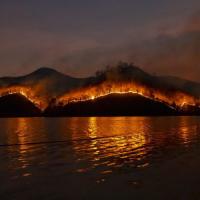
Urban fires pose a persistent hazard in Japanese urban areas. To address this, various fire spread models have been developed, with many relying on empirical formulations. However, to enhance model generality, a shift towards physics-based formulations is explored.
-
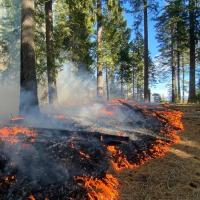
CAL FIRE, Berkeley Forests, and the California Fire Science Consortium are sponsoring an afternoon workshop at the 10th International Fire Ecology and Management Congress to highlight ongoing fire-related research programs in California.
-
The International Association of Wildland Fire is presenting the workshop in partnership with the Wildfire Fire Leadership Council (WFLC) and the Western, Southeast, and Northeast Regional Strategy Committees.
-
San Bernardino County, Online September 6 - November 1, 2023 and in-person Saturday, September 23rd. Registration now open!
-
Coastal Quest, in partnership with Ventura County Wildfire Collaborative, is proud to present the first California Wildfire Conference. This three-day exchange will bring together a diverse community of wildfire practitioners to focus on understanding, preventing, and recovering from wildfires.For more information and to register, visit:
-
Solano - Sacramento Counties, Online July 18 - September 12, 2023 and in-person Saturday, August 5th in Solano County. Registration now open!
-
Title: Why do houses burn in wildfires and what can we do about it?Presenters: Dr. Eric Knapp (USFS) and Yana Valachovic (UCANR)
-
FRID statistics have been used for decades to help managers and scientists understand the ecological consequences of changing fire frequencies. The Forest Service Region 5 Ecology Program worked with UC-Davis to build a spatial FRID data layer that compiles information about fire return intervals for major vegetation types on the 18 National Forests in California and adjacent land jurisdictions.
-
Three years ago, the California Board of Forestry’s Range Management Advisory Committee (RMAC) initiated public information workshops about the addition of prescribed grazing as a new practice allowed under Cal Fire’s Vegetation Treatment Program for managing vegetation that produce fuel for dangerous wildfires.