Displaying 21 - 30 of 108
-
California’s fire regimes are shifting at an accelerating pace, driving ecosystem degradation and increasing risks to human communities. Effective, science-based responses require a strong foundation of evidence. As the use of fire as a management tool expands, it is critical to demonstrate its ecological benefits while carefully considering trade-offs such as smoke emissions.
-
Land managers and practitioners need reliable, empirical evidence about which forest treatments reduce wildfire impacts—and how long those benefits persist. This seminar introduces a framework designed to meet that need. Part 1 presents findings from Yackulic et al.
-
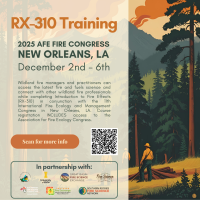
Wildland fire managers and practitioners can access the latest fire and fuels science and connect with other wildland fire professionals while completing Introduction to Fire Effects (RX-310) in conjunction with the 11th International Fire Ecology and Management Congress in New Orleans, LA.
-
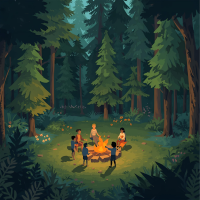
Join this interactive fire circle to hear tips from experienced fire science communicators and explore real-world examples from across the country. A panel discussion and hands-on showcase will help participants strengthen their science communication and collaboration skills in fire management.
-
The Joint Fire Science Program (JFSP) established the Fire Science Exchange Network to bridge the gap between research and practice, ensuring wildland fire science meets the evolving needs of landscapes and communities. Now more than ever, the urgency of wildfire challenges—across ecological, cultural, and social dimensions—demands innovation and collaboration. This session will showcase eight examples from across…
-

The California Fire Science Consortium (CFSC) strives to accelerate the awareness, understanding, and adoption of fire science information by decision-makers across the region. Applying research to land management decisions can be challenging due to limited actionable findings, information overload, researcher-practitioner disconnects, and findings that don’t always align with local conditions.
-
Participants will learn about fire behavior in our local vegetation types and how to function as an effective burn crew memeber.
-
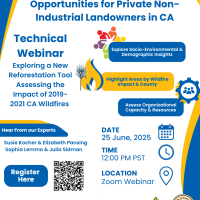
Join us to explore a new tool developed by American Forests and the University of California Cooperative Extension that supports post-fire reforestation planning across California’s non-industrial private forestlands (NIPF).
-
In this webinar, we will discuss how Behave v7 differs from BehavePlus v6 by highlighting the Surface, Surface/Crown, Surface/Mortality, and Surface/Contain modules and enhancements that will be included in the next few releases in 2025-2026. This webinar will be useful for both burn bosses and RX-300 cadres. This webinar will be most useful for both burn bosses and RX-300 cadres.